How to Choose Tall Flower Supports in 2026?
Choosing Tall Flower Supports in 2026 means matching a support to the plant, the site, and the weather—not simply buying the tallest stake. A climbing rose, a heavy peony, and a slender delphinium place very different demands on their supports. Get the match wrong, and stems may lean, rub, or break when flowers catch the wind.
The National Gardening Association’s 2023 National Gardening Survey reported that 80% of U.S. households took part in lawn and garden activities in 2022. That figure signals broad gardening interest, but it does not measure demand for supports. Keep that distinction clear. For practical choices, consider plant height at maturity, stem strength, spacing, and how easily the support can be installed without damaging roots. A hoop may cradle a spreading clump; a discreet stake and ties may suit one tall stem.
Local conditions matter, too. The USDA’s 2023 Plant Hardiness Zone Map uses average annual extreme minimum winter temperatures from 1991–2020. It helps gardeners assess winter cold, but it does not predict wind exposure or summer storms. Those details can change which material and anchoring method work best. Metal may suit a permanent border, while coated wire or bamboo can be easier to reposition. Neither is right everywhere. This guide explains how to compare Tall Flower Supports by strength, height, durability, and appearance, while noting where a simple support may still need adjustment as a plant grows.
Use RHS Mature-Height Data to Match Support Height and Plant Habit
How to Choose Tall Flower Supports in 2026?
Use RHS Mature-Height Data to Match Support Height and Plant Habit
Check the RHS profile for each plant’s expected mature height, and confirm the cultivar where possible. A tall label alone is not enough: varieties of the same flower can differ considerably. Treat published heights as a useful guide, not a promise, since soil, light, and weather change growth.
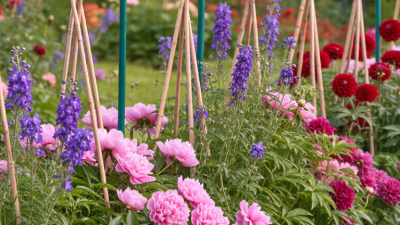
Choose a support that can hold the plant’s stems and flower heads without forcing them into an unnatural shape. Upright plants often need discreet stakes or a grid; sprawling plants may need a wider ring. Climbers need something they can grip or twine around.
Tips: Install supports while stems are still short. Match the structure to the plant’s habit, and leave room for growth. In a windy bed, check that stakes are firm after rain. I sometimes underestimate how wide a mature plant becomes; height figures do not tell the whole story.
Place supports near the plant, but avoid driving stakes through established roots. Tie stems loosely with soft garden ties, leaving space for movement. Recheck them as the plant grows, especially after heavy rain or wind. If the support looks oversized in spring, resist the urge to remove it too soon. Flower heads can add unexpected weight later, and an awkward-looking frame is still better than bent stems.
Compare 1.2–1.8 m Stakes for Tall Dahlias with Their Mature Height
A dahlia’s mature height is the useful starting point, not the height printed on a stake. Check the expected height for your variety, then allow for the section that must go into the soil. A 1.2 m stake may leave only about 0.9 m above ground after insertion. That can suit compact plants, but may not support a dahlia that grows to 1.5 m.
For plants around 1.2–1.5 m tall, a 1.5 m stake often offers a practical balance. Set it roughly 20–30 cm deep in firm soil, leaving enough exposed length for ties along the main stem. For dahlias approaching 1.8 m, consider a 1.8 m stake; even then, its exposed height may fall short of the plant’s full reach. That is usually workable if the lower and middle stems are secured. The flowers can extend above the support.
Check the bed after heavy rain or wind. Loose soil changes the calculation. Place stakes early, while the tubers are easy to locate, and tie stems loosely with soft garden ties as they grow. Leave room for the stem to thicken. I would not choose by height alone: a tall stake in soft ground can wobble, and a shorter, firmly set support may hold better. It is an imperfect rule, but matching exposed stake height to the plant’s likely stem length is a sound place to start.
Choose Materials by Load, Weather Exposure, and Reuse: Steel, Bamboo, or Hoops
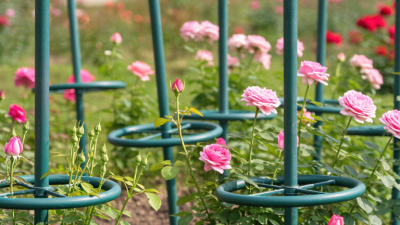
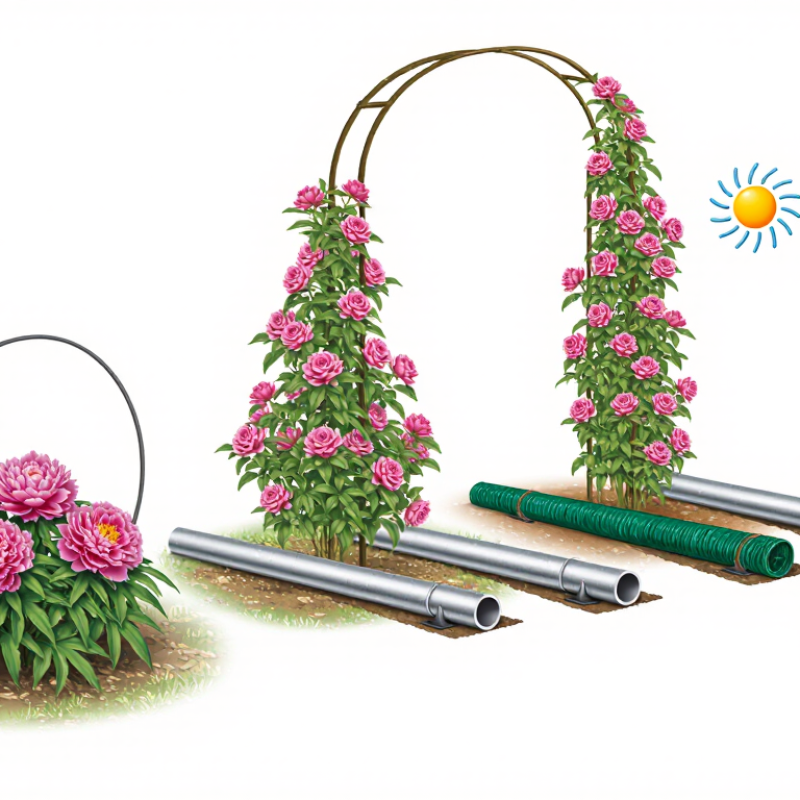
Choose supports by the plant’s mature weight and stem shape. Start with the mature plant, not the seedling. Tall dahlias or heavy peonies need rigid steel stakes and soft ties placed below flower heads. Bamboo works for lighter annuals, but wet soil and repeated use can weaken or split it. Hoops suit branching plants that lean outward; they support several stems without tying each one tightly. Check the local NOAA 1991–2020 Climate Normals for typical rainfall and temperature when judging outdoor exposure.
For repeated seasons or wet sites, choose coated steel and inspect scratches, joints, and ground-contact points for rust. NACE International’s 2016 IMPACT study estimated corrosion costs at US$2.5 trillion annually, about 3.4% of global GDP. That figure covers many industries, not garden stakes, but it shows why corrosion deserves attention. Bamboo is easier to replace, though its lifespan varies with storage and moisture. Hoops are reusable, but their diameter must match the plant’s spread.
Tips: Push a support 20–30 centimetres into firm soil, then test it by hand before tying stems. Use loose ties that allow growth. I would not assume a thicker stake is always better; in exposed beds, a poorly anchored rigid stake can still wobble.
How to Choose Tall Flower Supports in 2026? Choose Materials by Load, Weather Exposure, and Reuse: Steel, Bamboo, or Hoops
Compare common support options by plant weight, garden conditions, and expected reuse.
| Support option |
Relative support capacity |
Weather exposure |
Reuse and upkeep |
Best suited to |
Practical limitations |
| Steel stakes or towers |
Medium to high, depending on the thickness, shape, anchoring, and number of support points. |
Coated or galvanized steel generally handles outdoor exposure better than uncoated steel. Scratches and damaged coatings can allow rust to develop. |
Usually suitable for repeated seasons. Clean off soil and plant residue; check for rust, loose joints, and bent sections before reuse. |
Tall, upright flowers and plants with heavier stems that need individual staking or a firm frame. |
Can be heavy or conspicuous. A single stake may not stabilize a wide, top-heavy plant; use ties that support stems without constricting them. |
| Bamboo canes or teepees |
Low to medium for a single cane; a well-secured group of canes can provide broader support. |
Suitable for outdoor use, but prolonged damp conditions and ground contact can shorten service life. |
Lightweight and easy to store. Inspect for splitting, soft spots, or damaged ends before reusing; dry and store under cover when possible. |
Light to moderately heavy flowers, natural-looking garden supports, and temporary seasonal structures. |
May bend or break under concentrated weight or strong wind. Tie canes together securely and place them firmly in the soil. |
| Plant-support hoops |
Low to medium for one hoop; several hoops or a linked arrangement can support a wider group of stems. |
Metal hoops with a sound protective finish are generally more weather-tolerant. Uncoated or damaged metal may rust; plastic-coated surfaces can wear over time. |
Often reusable across seasons. Clean after use and check joints and coatings; store dry if the finish is damaged. |
Flower clumps that tend to lean or spread, especially when stems can grow through or rest on the hoop. |
Provides less control for an individual tall stem. Choose a hoop wide enough for the mature plant and install it before the clump becomes difficult to handle. |
Selection note: Support capacity varies with product design, installation, soil conditions, plant growth, and wind exposure. For tall or top-heavy flowers, use several well-anchored supports rather than relying on a single point of contact.
Install Supports Early—At Planting or Before Stems Reach 30 cm
How to Choose Tall Flower Supports in 2026?
Install tall flower supports at planting, or before stems reach 30 cm. Young stems are easier to guide, and early support avoids disturbing established roots. Choose a support based on the plant’s mature height and spread, not its size in spring. A peony ring, sturdy stakes, or a wide cage can help keep heavy blooms upright. Push stakes into moist soil carefully, away from the crown. Check that the structure feels stable before growth takes off. It is easy to underestimate how wide a plant will become.
Tips: Set supports loosely around the plant, leaving room for growth. Tie stems with soft garden ties, and leave a little slack. Check ties after rain or windy weather.
For a tall, branching flower, use several stakes and connect them with horizontal twine. This creates a discreet grid that supports stems from different directions. Place the first line low, then add another as the plant grows. Avoid pulling stems into a rigid shape; they need some movement. If you missed the early window, install supports while stems are still flexible. Work slowly. I have found that late adjustments can be awkward, and a support may look slightly uneven. Still, a secure, imperfect setup is better than bent stems after the first summer storm.
Plan ahead: Install tall-flower supports at planting, or add them before stems reach 30 cm (about 12 in). Early placement helps avoid disturbing established roots and stems.
These are practical timing thresholds, not results from a comparative trial.
Check Tie Spacing and Stability as Plants Grow and Flower
How to Choose Tall Flower Supports in 2026?
Check Tie Spacing and Stability as Plants Grow and Flower
A tall flower support should match the plant’s mature height, stem strength, and growing conditions—not just its size in spring. For dahlias or delphiniums, place supports while stems are still manageable, then guide growth through rings or several tie points. Space ties roughly 8–12 inches apart as a starting point, but shorten the gaps where stems bend or blooms add weight. Use soft, adjustable ties and leave room for stems to thicken; tight loops can scar them. A little slack matters.
Tips: Check ties weekly during fast growth and after heavy rain. Press the support gently at soil level; any rocking means it may need deeper placement or firmer ground. Keep ties below heavy flower heads, not across delicate buds.
Stability changes through the season. Wet soil can loosen a stake, while a full canopy catches wind like a small sail. Recheck the base, tie tension, and lean when plants begin flowering. If a stem keeps escaping, add another support point instead of pulling it sharply back. It is tempting to make the setup look perfectly even, but uneven growth is normal. I would adjust the support to the plant, not force the plant into a neat shape.