What Are the Best Rose Bush Climbing Frame Types?
Choosing the right Rose Bush Climbing Frame starts with the rose, not the catalog. A vigorous climber can quickly cover a narrow trellis, while a compact variety may need only a small obelisk. Think about the mature plant, the wall or bed around it, and how you will reach the stems for pruning. A support should feel sturdy before the first windy day arrives.
Rose educator and author Paul Zimmerman emphasizes matching rose varieties to their growing conditions. A practical paraphrase of that approach is: “Choose a frame that suits the rose’s mature size, then tie new canes in gently.” It is sensible advice, though no frame can make a poorly placed rose thrive. Sunlight, soil, airflow, and regular care still matter.
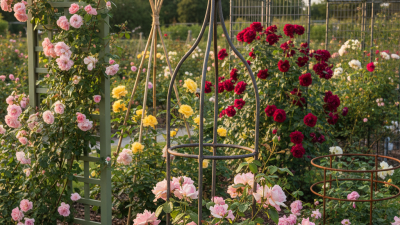
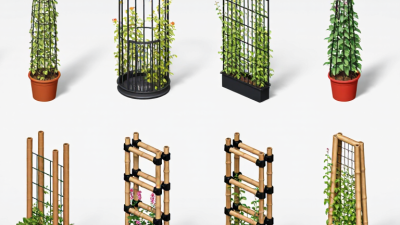
The main options include wall-mounted trellises, freestanding arches, obelisks, and sturdy metal or wooden panels. Each creates a different shape and asks for a different amount of space. An arch can turn a garden path into a leafy passage. A wall trellis keeps growth closer to the house, but its fixings must hold securely. Small detail. Leave room behind the canes for air and careful maintenance. Supports can also look attractive on their own, which matters in winter when the rose is bare.
This guide compares frame types by stability, placement, materials, and ease of training. It also considers a practical complication: the frame that looks perfect in spring may feel awkward once the rose fills it. There is no universal winner, only a better fit for your garden and your habits.
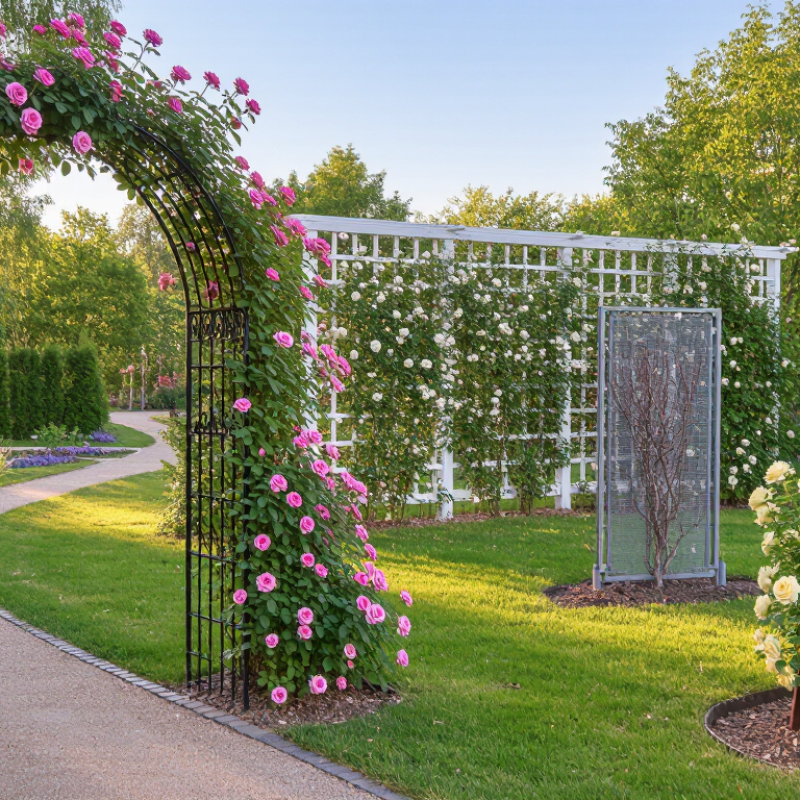
How Climbing Roses Grow: RHS Guidance on 30–45 cm Wall Clearance
What Are the Best Rose Bush Climbing Frame Types?
A climbing rose needs support and room for air to move behind its leaves. RHS guidance recommends planting roses around 30–45 cm from a wall. This gap helps roots reach soil beyond the wall’s dry rain shadow, where rainfall may not reach them. It also leaves space to train stems without pressing them flat against brick or timber.
Wall-mounted horizontal wires or a sturdy trellis can guide long stems across a broad surface. Keep the support slightly off the wall, and arrange the main stems in a fan shape where possible. This spreads growth and encourages flowering shoots along more of each stem. Tie stems loosely with soft ties; tight knots can rub as stems thicken. Check ties after windy weather.
For a freestanding frame, use a strong arch or obelisk if the rose has enough space around it. These supports suit open borders, but a heavy rose can overwhelm a flimsy frame. A common mistake is choosing the frame before checking the mature plant’s reach. Measure the wall clearance from the planting spot, not from the frame’s outer edge. The spacing can look excessive at first. That awkward gap is easier to manage than a rose crowded against a dry wall.
Wall Trellises and Fan Frames: Apply RHS Horizontal-Shoot Training Advice
Wall trellises work well where a rose has a narrow strip of soil beside a fence or house. Choose sturdy, weather-resistant supports, then leave space between the frame and wall for airflow and pruning access. The Royal Horticultural Society’s climbing-rose guidance recommends planting about 30–45 cm from a wall. That gap gives roots room and helps keep stems from pressing against masonry. Measure before planting; I have seen frames placed too close, making later tying awkward.
Fan frames suit open beds and broad walls, where several main stems can spread outward. Whichever frame you choose, guide the strongest shoots sideways or near-horizontal, tying them loosely at regular points. RHS training advice explains that horizontal main stems encourage flowering side shoots along their length, rather than concentrating blooms at the tips. This is the useful detail. Check ties after windy weather, and loosen any that bite into growing stems. When pruning, RHS guidance advises shortening flowering side shoots to about two or three buds. Do not expect perfect symmetry; roses often send one vigorous stem in an inconvenient direction, and the frame may need adjusting as the plant develops.
Arches and Pergolas: Match Frame Dimensions to the Rose’s Mature Growth
An arch suits a rose that can be trained upward and along its sides. Check the variety’s expected height and spread before choosing one. The opening should leave comfortable walking space after stems mature, not just on planting day. A narrow arch can quickly feel crowded. Allow room for new canes, and leave enough clearance for pruning.
Pergolas work better for vigorous roses with long, flexible canes. Match the structure’s height and length to the plant’s mature reach, using the plant label or reliable local growing advice as a guide. Strong posts and secure crossbeams matter; mature stems become heavy, especially after rain. Keep the main walkway clear. A broad frame may look generous, but it can overwhelm a small garden.
Measure the planting space, then compare it with the rose’s likely spread. Check how much sun reaches the frame, too. I used to think a taller structure was always safer, but an oversized pergola can leave a modest rose looking lost. Growth estimates are not exact, and pruning changes the shape. Leave some breathing room. Recheck the fit as the plant establishes, and adjust ties before stems become stiff.
Obelisks and Pillars: Compare Compact Supports for Vertical Rose Training
Obelisks and pillars suit compact spaces, but they guide roses differently. An obelisk’s tapered frame gives canes several sides to climb, while a pillar offers a narrower, upright route. Royal Horticultural Society plant profiles list many climbing roses at roughly 2.5–4 metres tall. That scale matters: check the mature size of your chosen variety before buying a support. A small patio obelisk can look elegant, then disappear beneath vigorous growth.
For a compact rose, choose a sturdy obelisk around 1.5–2 metres tall, with broad feet and horizontal rings for tying canes. A pillar works well beside a doorway or in a narrow bed, especially when its base is firmly anchored. Leave room to reach behind the stems. Tie young canes loosely with soft garden ties, then fan them outward rather than binding them into a tight column. This encourages more flowering shoots along the stems. I once underestimated how top-heavy a climbing rose could become after rain; a lightweight frame leaned before midsummer. Not ideal. RHS rose-training guidance supports spreading and securing canes, but the exact frame size still depends on the plant and site.
Frame Materials and Anchors: Assess Wind Exposure, Plant Weight, and Access
For a climbing rose, choose a frame that matches both the site and the mature plant. Galvanized steel resists rot and suits exposed gardens, while treated timber can blend into sheltered borders but needs regular checks for decay. Wind changes everything. ASCE/SEI 7-22 defines basic wind speed using a three-second gust measured 10 metres above ground in Exposure C. That is a structural design reference, not a rating for garden trellises. Still, it highlights why a breezy, open corner needs stronger bracing than a protected wall. Anchor posts into firm ground, and avoid relying on shallow stakes in loose soil.
Plant weight matters too. Mature canes, wet leaves, and rain-soaked blooms all load the frame; a light obelisk may lean as growth thickens. Use corrosion-resistant fixings, and check joints after storms and each growing season. The Royal Horticultural Society advises providing sturdy support for climbing roses and tying growth in as it develops. Leave enough room to prune, tie canes, and reach the base without stepping through thorny growth. I may be overcautious, but access is easy to overlook.
Tip: Before planting, gently push the frame from several directions and inspect its anchors. This simple check cannot certify safety, but it can reveal movement early. Keep it accessible.