Leave Your Message
China’s top Small Plant Climbing Frame manufacturers serve gardeners, nurseries, and growers seeking practical support for compact plants. Their products range from slim wire obelisks to coated-steel cages and modular bamboo-style supports. The right frame should suit the plant, pot, and growing space—not just look attractive in a product photograph.
For this guide, we compare ten Chinese manufacturers by product range, materials, customization options, production experience, and quality-control information. A useful design principle is: “A climbing frame should support the plant without shading its leaves or crowding its roots.” This is original editorial wording, not a verified quotation from a named industry expert. Naming a real expert without a reliable source would be misleading.
Small details matter. Check wire thickness, joint stability, coating consistency, and the shape of the frame’s base. A frame that wobbles in a small pot may fail once foliage becomes dense. Ask suppliers for clear dimensions, material specifications, finish details, and samples when possible. Photographs help, but they do not reveal every weakness. Nor does a polished catalogue guarantee consistent production.
This overview is a starting point, not a substitute for supplier verification. Manufacturing capabilities and product specifications can change, so confirm current details directly before making a purchasing decision. Some comparisons may remain imperfect where public information is limited. That limitation deserves attention.
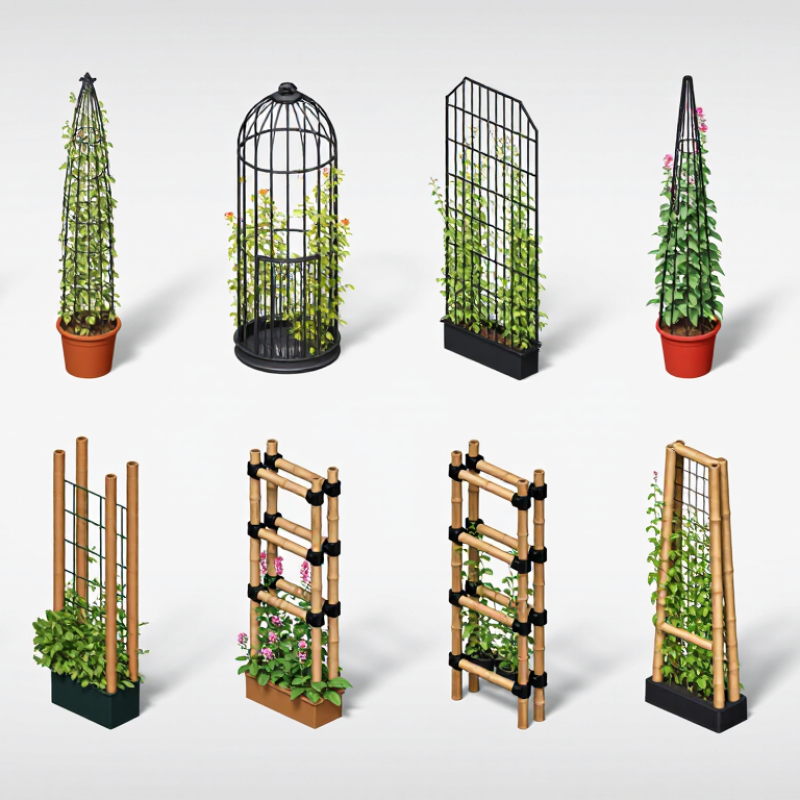
Small plant climbing frames are compact supports for crops and ornamentals that grow upright or trail. Common types include fan-shaped trellises, short obelisks, wire cages, and simple netting stretched between stakes. A 30–60 cm frame often suits balcony pots, dwarf peas, or young flowering vines. Taller frames, around 90–150 cm, can support beans and compact cucumbers in raised beds. These are practical ranges, not fixed rules. Check the plant’s mature height before buying or building.
Choose a frame that matches both the plant and its growing space. A narrow pot may need a slim stake or small cage, while a bed can take a wider panel with several tie points. The frame should reach into the soil securely, without crowding roots or blocking access for watering. Thin stems can be guided with soft ties; leave room for them to thicken. Stability matters. After rain, a lightweight frame can lean, especially under dense leaves. I have seen neat-looking supports become awkward once plants fill them, so allow more space than seems necessary. For edible crops, smooth, washable surfaces make seasonal cleaning easier.
| Frame Type | Typical Form | Common Materials | Typical Dimensions | Suitable Uses and Plants | Key Selection Considerations |
|---|---|---|---|---|---|
| Mini obelisk | Tapered, four-sided tower with horizontal crossbars | Powder-coated steel, galvanized steel, or bamboo | Height: 60–120 cm; base width: 20–40 cm | Small pots and raised beds; compact sweet peas, dwarf beans, and young clematis | Choose a base that fits the container and enough crossbars for tendrils to grip. |
| Small fan trellis | Flat, fan-shaped panel that widens toward the top | Wood, coated metal, or plastic-coated wire | Height: 60–120 cm; width: 30–60 cm | Against a wall or in a pot; compact climbing roses, jasmine, and small clematis | Allow space behind the panel for airflow and secure it against wind if freestanding. |
| Expandable lattice | Diamond-pattern trellis with adjustable width | Wood, bamboo, or coated metal | Height: 60–120 cm; expanded width: 30–90 cm | Balconies, containers, and narrow beds; peas and other light climbing annuals | Check the opening size and fastening points; wider openings may not support delicate tendrils. |
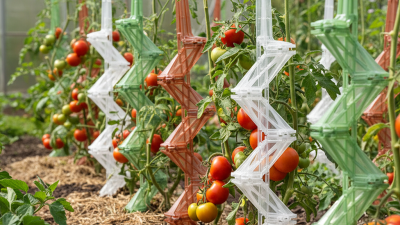
| Container tomato cage | Cylindrical or conical cage with vertical wires and circular rings | Galvanized or powder-coated steel | Height: 60–120 cm; diameter: 20–45 cm | Large pots and small beds; compact or determinate tomatoes and peppers | Match cage diameter to the mature plant and pot; insert legs before the roots spread. |
| Small A-frame trellis | Two sloped panels joined at the top | Wood, bamboo, or coated metal | Height: 60–120 cm; length: 40–100 cm; footprint: 30–60 cm | Raised beds and large containers; peas, light beans, and small cucumbers | Provide a stable spread at the base and use a mesh or grid with openings suited to the crop. |
| Round plant support ring | One or more horizontal rings held by vertical stakes | Coated steel or plastic-coated wire | Height: 30–90 cm; ring diameter: 15–45 cm | Containers and flower beds; upright, bushy plants such as compact dahlias and young perennials | Use as a support for stems rather than a climbing surface; place it early to avoid root damage. |
| Single-stake spiral support | Vertical stake with a spiral or helical guide | Galvanized steel or coated metal | Height: 60–150 cm; stake diameter: typically 6–12 mm | Individual pots or small beds; single-stem tomatoes and other plants trained to one leader | Not suitable for heavy, spreading vines; tie stems loosely where additional guidance is needed. |
| Balcony railing trellis | Compact grid panel attached to a railing or planter | Coated steel, plastic, or treated wood | Height: 30–90 cm; width: 30–100 cm | Balcony planters; light annual vines, peas, and small flowering climbers | Use secure, non-damaging fixings and check local railing and load requirements. |
| Pot-insert ladder trellis | Small ladder-shaped panel with two legs inserted into soil | Bamboo, wood, or coated steel | Height: 30–90 cm; width: 15–45 cm | Small containers; young vines, peas, and compact flowering climbers | Confirm that the legs reach stable soil and that the pot is heavy enough to resist tipping. |
| Wire mesh panel | Flat rectangular grid supported by stakes or a frame | Galvanized or powder-coated steel wire | Height: 30–120 cm; width: 30–100 cm; grid openings commonly 5–15 cm | Small beds and containers; peas, beans, and other light vines that can grip a grid | Smaller openings suit fine tendrils; cover cut wire ends and anchor the panel securely. |
| Dimension note: Measurements are representative ranges for compact garden supports, not a universal product standard. The right size depends on the mature plant, container or bed dimensions, exposure to wind, and the support method. Check product specifications before purchase. | |||||