Leave Your Message
Choosing the right Tomato Stakes can determine whether a productive plant remains upright or collapses after heavy rain. Tomato varieties differ in height, fruit weight, and growth habit. Indeterminate plants may continue growing for months, while determinate varieties often finish earlier and need shorter support.
The scale of tomato production explains why support design matters. FAOSTAT reported global tomato production at roughly 186 million tonnes in 2022, showing the crop’s major agricultural importance. However, commercial production methods do not always suit a backyard plot. A thick wooden stake may support a vigorous plant, but it can occupy valuable soil space and require repeated tying. A slim plastic stake may look convenient, yet it can bend under wet foliage and ripening fruit.
University extension guidance offers more practical direction. Cornell Cooperative Extension and the University of Minnesota Extension commonly recommend securing plants early, before stems become crowded or damaged. This advice is simple. Timing matters.
This guide compares wooden, metal, fiberglass, spiral, and adjustable Tomato Stakes. It considers load capacity, durability, installation depth, airflow, soil conditions, and reuse. It also examines whether a stake works best alone or with soft plant ties. The strongest option is not always the best option. A gardener with sandy soil may need deeper anchoring, while someone growing tomatoes on a balcony may value compact storage more than maximum height.
Some recommendations remain imperfect. Weather, cultivar, and pruning habits can change the result. Still, combining extension research, production data, and hands-on growing experience provides a more dependable way to choose support.
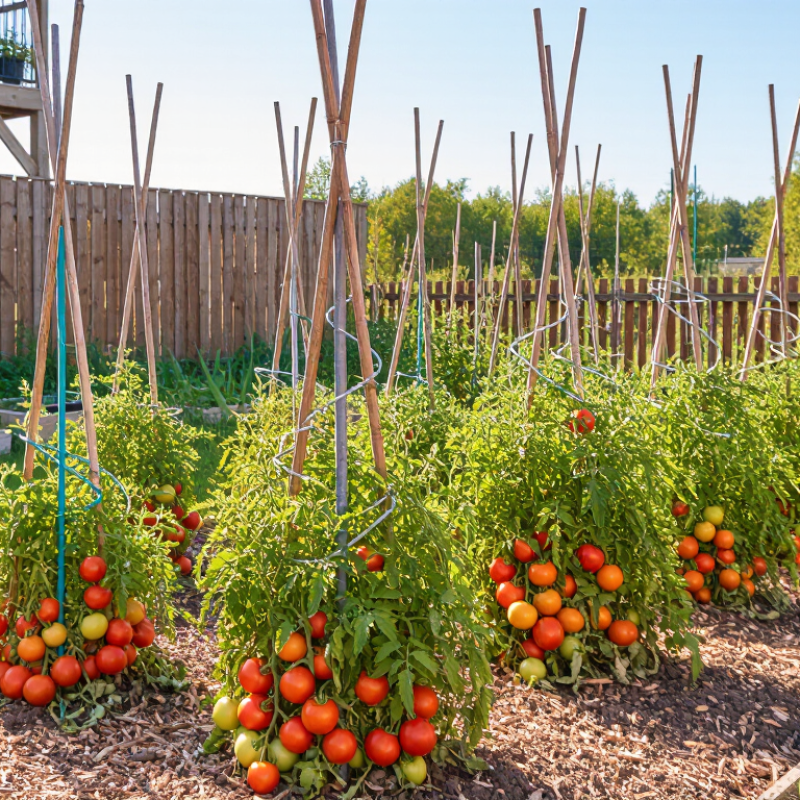
Indeterminate tomatoes keep producing flower clusters until frost, unlike determinate plants that stop near a set height. University extension production guides commonly place mature indeterminate vines between 6 and 12 feet. A short stake becomes a yearly mistake. Choose a support at least 6 feet long, or 8 feet for vigorous soil and long growing seasons. The 2024 Midwest Vegetable Production Guide also emphasizes securing stems early, before heavy fruit bends them.
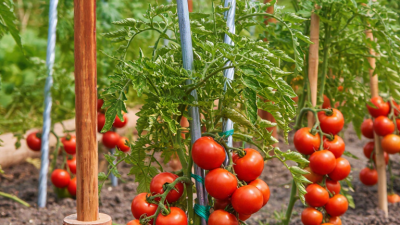
Wooden stakes suit small beds and offer simple, firm support. Metal stakes last longer and resist moisture, while spiral supports work best when plants are pruned consistently. Drive the stake 12 to 18 inches into the soil, leaving enough height for the main stem. Tie the vine with soft cloth every 8 to 12 inches. Avoid thin wire. It can cut into expanding stems.
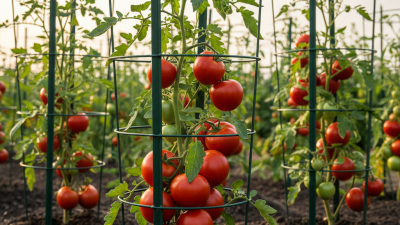
Field experience reveals an awkward detail: even an 8-foot stake may fail when an indeterminate vine reaches the top. Some growers should use a cage, overhead string, or seasonal pruning instead. University of Minnesota Extension guidance notes that indeterminate tomatoes may exceed 8 feet under favorable conditions. Wind makes the problem worse. I once underestimated wet foliage and watched a leaning stake pull loose after rain. The better choice depends on cultivar vigor, soil fertility, pruning habits, and local weather—not stake height alone.
| Stake Type | Typical Length | Best Tomato Use | Strength and Stability | Advantages | Limitations | Recommended Support Setup |
|---|---|---|---|---|---|---|
| Untreated Wood Stake | 6–8 ft | Indeterminate tomatoes in home gardens | Good when thick enough and driven deeply; strength varies by wood species | Affordable, easy to cut, simple to tie plants to | Can rot, split, or weaken after repeated wet seasons | Use a stake about 1–2 inches thick and bury 18–24 inches; tie the main stem at regular intervals |
| Galvanized Steel Stake | 6–8 ft | Tall indeterminate plants and windy locations | Very strong and resistant to bending when adequately anchored | Reusable, weather-resistant, and suitable for heavy vines | May become hot in strong sun; exposed edges can damage stems if ties are tight | Bury at least 18 inches and use soft, flexible ties; add a cross-support for very heavy crops |
| Fiberglass Stake | 6–8 ft | Long-season gardens needing lightweight, reusable supports | Flexible and resistant to rust and moisture; may need deeper anchoring in wind | Lightweight, durable, and easy to handle | Can flex under a heavy canopy and may be difficult to cut cleanly | Drive 18–24 inches into firm soil and combine with horizontal twine or plant clips |
| Bamboo Stake | 6–8 ft | Light to moderate indeterminate growth | Moderate strength; thicker poles provide better support than thin canes | Light, renewable, and easy to place around young plants | May split, decay, or bow under large fruit loads | Choose thick, straight poles, bury approximately 18 inches, and use several gentle ties |
| Wooden T-Post or Double-Stake System | 6–8 ft | Large indeterminate plants with multiple leaders | High stability when two supports are joined with twine or crossbars | Handles broad plant canopies and reduces stem crowding | Uses more material and requires additional tying | Place supports on both sides of the plant and connect them with horizontal twine at several heights |
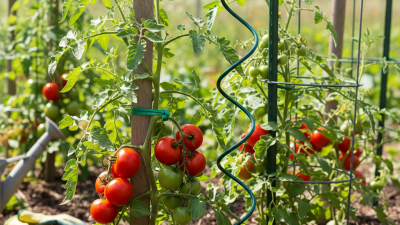
| Metal Spiral Stake | 5–7 ft | Compact indeterminate varieties with regular pruning | Moderate support; stability depends on soil depth and plant weight | Quick to install and can guide stems without many ties | Often too short or narrow for vigorous, heavily fruited vines | Use for compact growth; add a second stake or horizontal twine if the plant outgrows the spiral |