China Top Plastic Garden Trellis Manufacturers?
Choosing reliable China Top Plastic Garden Trellis Manufacturers requires more than comparing catalog prices. A trellis may look simple, but its performance depends on resin quality, mold accuracy, UV resistance, and connection strength. Garden retailers, landscapers, and wholesalers should examine these details before placing an order.
A practical review starts with the material. Virgin or properly blended polypropylene and polyethylene can provide useful flexibility and outdoor durability. However, not every supplier explains its formulation clearly. Ask for product specifications, UV testing information, sample units, and batch consistency records. A useful Plastic Garden Trellis should remain stable beside a sunny wall, support climbing plants without sharp edges, and withstand routine handling during delivery.
Factory experience also matters. Manufacturers with export knowledge usually understand packaging limits, pallet loading, labeling, and inspection procedures. Request photographs of production lines, sample approvals, and quality-control checkpoints. Independent audits can add confidence, although they cannot replace physical testing. That point is easy to overlook.
Design capability deserves equal attention. Some factories offer modular panels, adjustable heights, decorative patterns, or custom colors. These options can improve retail appeal, but excessive customization may increase tooling costs and lead times. Buyers should compare minimum order quantities, communication speed, replacement policies, and after-sales support.
The strongest suppliers are not always the cheapest. A lower quotation may hide thinner walls, weaker joints, or inconsistent coloring. Even experienced buyers can misjudge these differences from photographs. This guide explores practical criteria for identifying capable Chinese manufacturers and selecting trellis products that balance appearance, strength, compliance, and long-term value.
What Are Plastic Garden Trellises and How Are They Used?
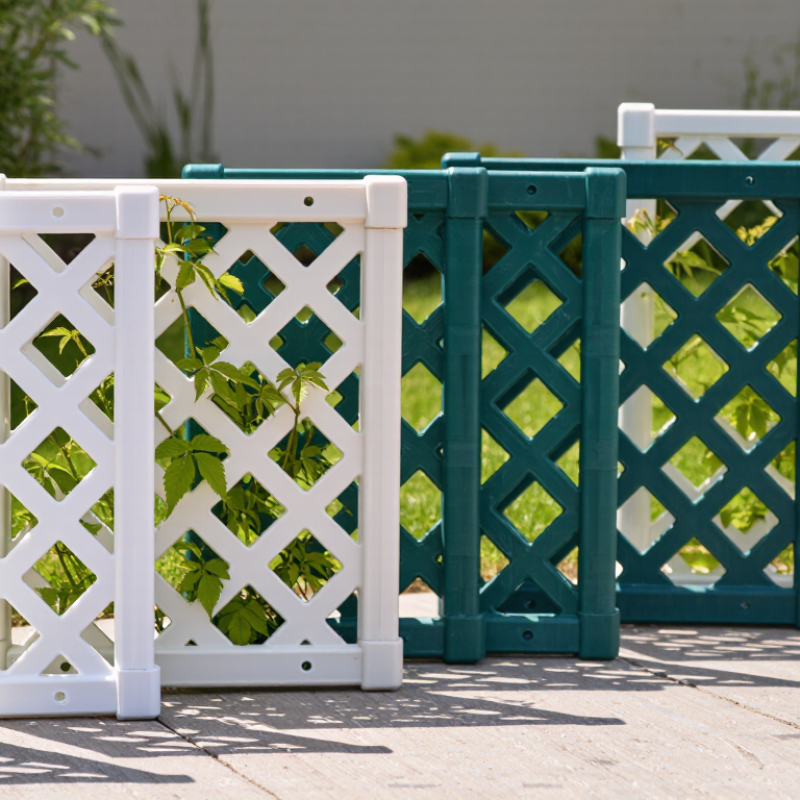
Plastic garden trellises are lightweight support frames made from molded plastic, coated plastic, or recycled polymer. Their open grid gives climbing plants a surface to grip. Gardeners use them for tomatoes, peas, beans, cucumbers, roses, and clematis. A 2024 National Gardening Association survey reported that about 80% of U.S. households participated in some form of gardening. That broad participation increases demand for simple, space-saving supports.
A trellis can stand against a wall, fit inside a planter, or form a short garden screen. Install it before vines become heavy. Push the stakes firmly into moist soil, then guide young stems through the openings. Plastic does not rust, but thin panels may bend under wet foliage or fruit weight. UV exposure can also make cheaper material brittle. The 2024 Grand View Research gardening equipment report identifies durability and low-maintenance design as important market factors. That sounds practical, though the report does not measure trellis performance directly. Choose UV-stabilized plastic, wide feet, and openings suited to the plant. Leave airflow behind dense vines. Otherwise, leaves may stay damp after rain. It happens easily. Check joints after storms, because a small crack can spread without warning.
Key Features to Consider When Choosing a Plastic Garden Trellis
When comparing China’s top plastic garden trellis manufacturers, inspect performance before appearance. A trellis should resist bending, cracking, and repeated outdoor exposure. UV stabilization matters, especially on south-facing walls and balconies. The OECD’s Global Plastics Outlook reports that global plastic waste reached 353 million tonnes in 2019. This makes recycled content worth checking, but recycled plastic must still meet strength requirements.
Look for clear material specifications, such as polypropylene or high-density polyethylene, rather than vague “premium plastic” claims. Ask for tensile or flexural test results based on recognized methods, including ASTM D638 or ISO 178. These figures help compare panels fairly. They do not predict every garden situation.
A leafy vine can act like a sail during storms. Connector strength matters too. Thin clips often fail first.
UV-resistant additives, rounded edges, and stable feet improve practical use. Check panel thickness, mesh spacing, and maximum recommended load. A darker trellis may appear stronger, but color proves little. I would request weathering evidence, such as ISO 4892-3 testing, before trusting long-term outdoor claims. PlasticsEurope reported global plastics production at 400.3 million tonnes in 2022, so durability and repairability deserve equal attention. Some recycled panels may show slight color variation. That is not automatically a defect. Still, manufacturers should disclose recycled content, test conditions, warranty limits, and installation guidance clearly. A careful buyer should question impressive numbers without test details.
How to Identify Reliable Chinese Plastic Trellis Manufacturers
How to Identify Reliable Chinese Plastic Trellis Manufacturers
Choosing a Chinese plastic trellis manufacturer requires more than comparing online prices. Start with production evidence. Ask for factory videos, mold photos, material specifications, and recent batch records. A dependable supplier should explain resin type, UV stabilizer content, wall thickness, and load-testing methods clearly. According to PlasticsEurope’s Plastics—The Fast Facts 2024, global plastics production reached about 413.8 million tonnes in 2023. This scale creates opportunity, but also makes material verification essential. Request samples from different production batches, not only polished samples prepared for sales meetings.
Check whether the manufacturer uses documented quality controls, calibrated testing equipment, and traceable raw materials. ISO 9001 certification can support confidence, yet it does not guarantee strong outdoor performance. Ask for test results based on recognized methods, such as ISO 4892 for weathering or ISO 527 for tensile properties. Review packaging strength, color consistency, connector fit, and resistance after sun exposure. The OECD Global Plastics Outlook reported 353 million tonnes of plastic waste in 2019, so recyclability claims deserve careful questions. Some recycled content may reduce durability. That trade-off should be stated honestly.
Tips:
Visit the facility when possible. Speak with the quality manager, not only a salesperson. Compare three samples after simulated weathering. Confirm inspection before shipment and replacement terms in writing. I would also request a small trial order. It costs more initially, but one weak trellis can reveal hidden molding defects. Suppliers may make mistakes, and buyers can miss them too. Reliability grows through evidence, not confident promises.
Leading Regions and Manufacturing Strengths in China
China Top Plastic Garden Trellis Manufacturers?
China’s plastic garden trellis production is concentrated in several strong industrial regions. Zhejiang supports mold development, injection molding, and fast product customization. Ningbo and Taizhou are known for dense plastics supply chains and skilled tooling services. Jiangsu offers efficient molding capacity, automated workshops, and stable access to engineering plastics. Guangdong adds strong export experience, packaging services, and flexible order coordination.
Northern regions, including Shandong, can be competitive for larger plastic components and agricultural applications. Manufacturing strengths vary by factory, not only by province. Some suppliers excel at lightweight PVC trellises, while others produce stronger PP structures with UV-resistant additives. Ask for material specifications, load tests, color samples, and outdoor aging data. A low price can hide thinner walls or weak connectors. That matters after one harsh summer.
Tips: Compare factories using the same drawing and material grade. Request recent production photos and a sample before approving bulk orders. Check mold ownership, quality records, and packaging tests. Confirm whether “UV resistant” has documented testing behind it. Regional reputation helps, but it is not proof. Even experienced buyers can overtrust polished catalogs. A careful factory audit remains worthwhile.
How to Compare Suppliers, Products, Prices, and Certifications
China Top Plastic Garden Trellis Manufacturers?
Comparing Chinese plastic garden trellis suppliers requires more than checking catalog prices. Grand View Research estimated the global plastics market at about USD 712.6 billion in 2023, yet garden trellis products are rarely reported as a separate category. This makes supplier-level verification essential. Request resin type, wall thickness, UV stabilizer details, mesh dimensions, load-test results, and expected outdoor service life. A sample left under strong sunlight reveals more than polished photographs.
Price comparisons should use the landed cost, not the factory quotation alone. Include tooling, packaging, inspection, inland transport, freight, tariffs, and replacement rates. Ask for the minimum order quantity and production capacity during peak season. Two trellises may share the same size but differ in recycled content, rigidity, and breakage risk. Cheap can become expensive. Sometimes, the cheapest quote is simply incomplete.
Certification documents need careful checking. ISO 9001 supports quality-management controls, while ISO 14001 indicates an environmental-management system. Neither certificate automatically proves trellis durability. Request the certificate number, issuing body, validity period, and factory address. For chemical compliance, ask for recent third-party test reports aligned with applicable REACH requirements. The UN Environment Programme reports that plastic production could rise substantially by 2060 without stronger intervention, so recycled content deserves verification, not vague claims. The comparison remains imperfect; batch variation and transport damage can change the real result. Use a pre-shipment inspection.
China Top Plastic Garden Trellis Manufacturers: Supplier Comparison Framework
The chart presents a practical buyer weighting model for comparing plastic garden trellis suppliers. Product performance and UV durability receive the highest priority, followed by price, certifications, production capability, and delivery reliability. Use the same criteria and request matching documentation, samples, specifications, and quotations from each supplier.