10 Essential Tips for Using Peony Support Cages Effectively
In the world of horticulture, the peony flower stands out not only for its breathtaking beauty but also for its growth requirements. According to the American Peony Society, peonies are among the most beloved perennials, with over 200 varieties available. However, their delicate stems often require adequate support to prevent bending or breakage, particularly during peak blooming seasons. This is where Peony Support Cages come into play, offering gardeners a practical solution for maintaining the integrity of their precious blooms.
Expert horticulturist Dr. Sarah Lane emphasizes the importance of using Peony Support Cages in cultivation practices, stating, "Effective support systems are crucial for the thriving of peonies, as they help ensure that the flowers can fully express their beauty without the threat of damage." Utilizing these cages not only enhances the aesthetic appeal of the garden but also promotes healthier plant growth and longevity. With the right techniques and guidance, gardeners can effectively integrate Peony Support Cages into their landscaping strategies, ensuring that their peonies not only survive but flourish. Through this article, we will explore ten essential tips for using Peony Support Cages effectively, designed to help both novice and seasoned gardeners achieve stunning results.

Choosing the Right Type of Peony Support Cage for Your Garden
When it comes to selecting the right type of peony support cage for your garden, there are several factors to consider that ensure your peonies grow beautifully and remain well-supported throughout their blooming season. First, evaluate the size and height of your peonies. Generally, taller peony varieties require more robust support structures to prevent them from bending or breaking under the weight of their large blooms. Opt for cages that are at least 18-24 inches tall, allowing sufficient room for growth while providing stability.
Another crucial aspect is the material of the support cage. Sturdy options, such as metal or thick plastic, provide the necessary strength and durability to withstand weather conditions. It’s also essential to choose a cage with a wide base to prevent tipping, especially during heavy rains or winds. Additionally, look for cages with openings wide enough to accommodate the foliage and flowers without causing damage.
Tip: When installing your peony support cages, place them at the same time you plant your peonies. This approach helps to minimize root disturbance and ensures a stable support system as the plants grow. Another tip is to regularly check the cages during the growing season, adjusting them if necessary to accommodate the expansion of the plants and to maintain their structural integrity.
10 Essential Tips for Using Peony Support Cages Effectively
| Tip Number |
Tip Description |
Best Cage Type |
Optimal Size (Diameter) |
Recommended Plant Height |
| 1 |
Choose the right size cage for the peony variety |
Round Support Cage |
18 inches |
24-36 inches |
| 2 |
Install the cage early in the growing season |
Sturdy Wire Cage |
16 inches |
18-30 inches |
| 3 |
Align the cage with the plant’s growth |
Adjustable Support Cage |
20 inches |
36-48 inches |
| 4 |
Use additional stakes for taller varieties |
Wooden Stake Combination |
N/A |
48+ inches |
| 5 |
Ensure the cage is stable |
Heavy-Duty Wire Cage |
24 inches |
30-42 inches |
| 6 |
Prune peonies to encourage upright growth |
Circular Cage |
18 inches |
24-36 inches |
| 7 |
Consider the color and style of the cage |
Decorative Support Cage |
16 inches |
24-30 inches |
| 8 |
Regularly check and adjust the cage if needed |
Flexi-Cage |
N/A |
30-36 inches |
| 9 |
Use multiple cages for bushier varieties |
Cluster Support System |
20 inches |
36-48 inches |
| 10 |
Remove or adjust supports after blooming |
Removable Support Cage |
18 inches |
24-36 inches |
Understanding the Growth Habits of Peonies for Effective Support
When it comes to ensuring the health and beauty of peonies, understanding their growth habits is crucial for using support cages effectively. Peonies are known for their lush foliage and large, showy blooms, but as they grow, their heavy flowers can sometimes lead to drooping or breakage. Knowing that peonies can develop multiple stems and reach heights of over three feet, choosing the right type of support will play a significant role in maintaining their upright posture.
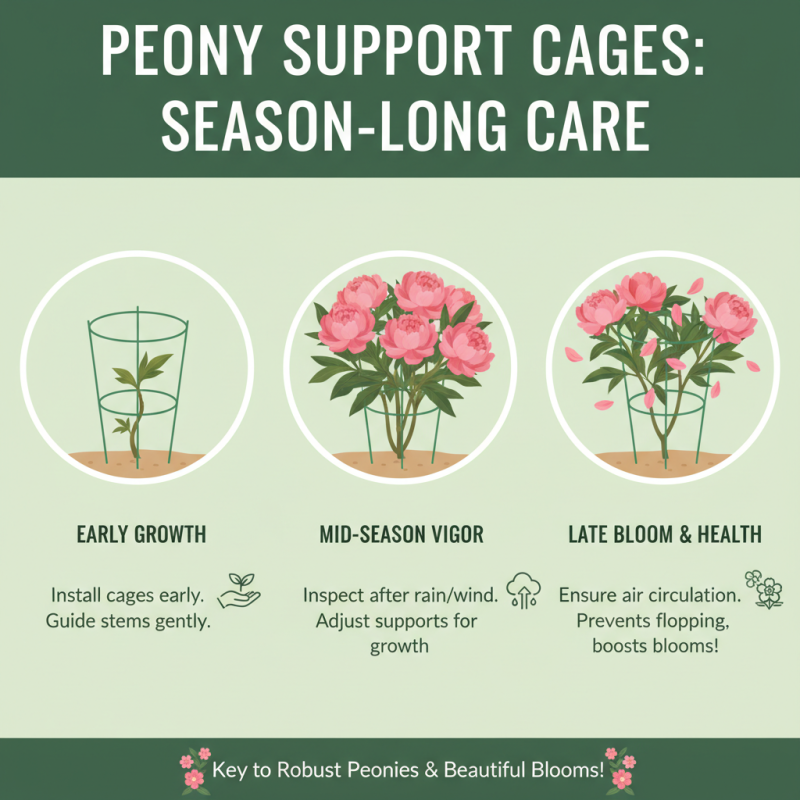
One essential tip for using peony support cages is to install them early in the season. This allows the plant to grow naturally around the support, minimizing any stress or damage to the stems. Additionally, selecting cages that can adjust in height will accommodate the peonies’ growth, providing adequate support without constraining their freedom. It's also important to choose cages made of durable materials that can withstand strong winds and heavy rains to prevent collapse.
Another valuable piece of advice is to monitor the growth closely. Regularly check for any plants that may need additional support as they continue to mature. As the peonies bloom, ensure the support remains unobtrusive, allowing the flowers to be the main attraction. By understanding the growth habits of peonies and implementing these tips, gardeners can enjoy a magnificent display of blossoms without the worry of unsightly drooping stems.
Proper Installation Techniques for Peony Support Cages
Proper installation of peony support cages is crucial to ensure that your plants thrive while maintaining their stunning blooms. First, it’s important to select the right type of cage for your peonies. Consider their height and growth habit when choosing a cage, as well as the material's durability against the elements.
Position the cages early in the growing season before the peonies begin to shoot up. This not only helps avoid disturbing the plants' roots later but also allows the stems to grow through the support naturally.
Next, when installing the cage, gently place it around the peony bush, ensuring it surrounds the plant without impeding its growth. Secure the cage to the ground using garden stakes or anchors, especially if you live in a windy area. This will provide stability as the peonies grow taller and heavier with blooms.
As the growing season progresses, guide the peony stems into the cage to promote an upright growth habit. Regular adjustments may be necessary to accommodate their rapid growth, ensuring that the flowers remain supported and do not droop or break. By focusing on these installation techniques, you can help your peonies reach their full potential.
Maintaining Your Peony Support Cages Throughout the Growing Season
Maintaining your peony support cages throughout the growing season is crucial for ensuring robust plant health and beautiful blooms. Research indicates that peonies are among the top ten most popular garden flowers, prized for their large, fragrant flowers. In order to support their growth and prevent them from flopping over, regular maintenance of support structures is essential. This includes inspecting cages for stability after heavy rain or wind, which can compromise their integrity. It's recommended to adjust the supports as plants grow, allowing for adequate spacing without restricting the peony's natural movement.
In addition to physical checks, incorporating a routine of timely watering and fertilization can enhance the performance of your peony plants. Reports suggest that applying a balanced fertilizer in early spring can significantly increase blooming potential, ensuring that the weight of the flowers does not overpower the plants. Furthermore, it's advisable to keep the area around the cages clear of weeds and debris, which can create competition for nutrients and water. By following these maintenance tips, gardeners can promote a healthy environment conducive to flourishing peonies, ultimately maximizing their garden's aesthetic appeal throughout the growing season.
Tips for Adjusting Support as Peonies Mature and Bloom
As peonies progress through their growth stages, the need for effective support becomes increasingly critical. According to the American Peony Society, peonies tend to grow between 2 to 4 feet tall, making them susceptible to damage caused by wind and rain. Using peony support cages not only helps keep the flowers upright but also promotes better air circulation, which is vital for preventing fungal diseases. Adjusting the height and positioning of these support systems as the plants mature can ensure that they receive the support they need without compromising their natural growth.
When peonies begin to bloom, their weight can cause them to slump or collapse if not adequately supported. Research conducted by the Royal Horticultural Society indicates that timely adjustments to support cages can reduce incidence of broken stems and improve overall flower display. As buds swell and flowers open, gardeners should gently lift and reposition the cage to accommodate the developing blooms. It is essential to ensure that the cage fits snugly around the plants, providing stability while allowing enough room for unrestricted growth and air flow.
By understanding the growth patterns of peonies and being proactive about support adjustments, gardeners can enhance the health and aesthetics of their peony displays.