Top 5 Tips for Choosing a Runner Bean Climbing Frame
Choosing the right Runner Bean Climbing Frame can significantly impact your gardening experience. A well-designed frame supports healthy growth, prevents breakage, and enhances the beauty of your garden. However, many gardeners overlook this crucial element.
Consider the size and height of the frame. It should accommodate the vigorous growth of runner beans. Another factor is the material used. Wooden frames can blend in beautifully, while metal ones offer durability. Each option has its unique advantages and disadvantages. The choice can feel overwhelming.
Don't forget about stability. A shaky frame can stunt growth and lead to frustration. Some frames may require anchoring, while others are self-supporting. Reflect on your garden's specific needs. Assess the space available. Making an informed choice can lead to a thriving garden filled with delicious runner beans.
Choosing the Right Material for Your Runner Bean Climbing Frame
When selecting a climbing frame for runner beans, the material is crucial. Metal frames, such as galvanized steel, offer durability. According to industry reports, metal structures can last over ten years with proper care. They withstand harsh weather, ensuring your beans climb safely.
Wood is another option. Untreated lumber can be cost-effective but tends to rot. A study found that untreated wood lasts only three to five years in moist environments. Cedar and redwood are more resistant to decay but are pricier. Weigh the longevity against your budget.
Plastic frames are lightweight and easy to assemble. Most weather-resistant versions can endure various climates. However, they may not support heavy growth. Durability varies, so read reviews carefully. Remember, selecting the right material impacts the planting season. It’s worth pondering your choices to find what fits best for your garden.
Top 5 Materials for Runner Bean Climbing Frames
Determining the Optimal Height for Maximum Growth of Runner Beans
Choosing the right height for your runner bean climbing frame is crucial for their growth. Runner beans can reach heights of up to ten feet. A frame that accommodates this height is essential. But how high should you go? Many gardeners opt for six to eight feet. This height allows for ample growth while still being manageable for harvesting.
Consider the location of your climbing frame. Placing it in a sunny spot is vital. Runner beans thrive in direct sunlight. If the frame is too high and the plants don't receive enough light, they may not flourish. Reflect on your space. A taller frame might look appealing, but it can be tricky to maintain. Can you reach the beans easily?
Remember, the frame should also provide support. Weak frames can collapse under the weight of heavy foliage. Some gardeners invest time in making custom frames. This DIY approach can lead to better performance and a sense of accomplishment. Experimenting with different heights may be necessary. Your garden space is unique, and what works for others may not work for you.
Understanding the Benefits of Different Frame Designs for Stability
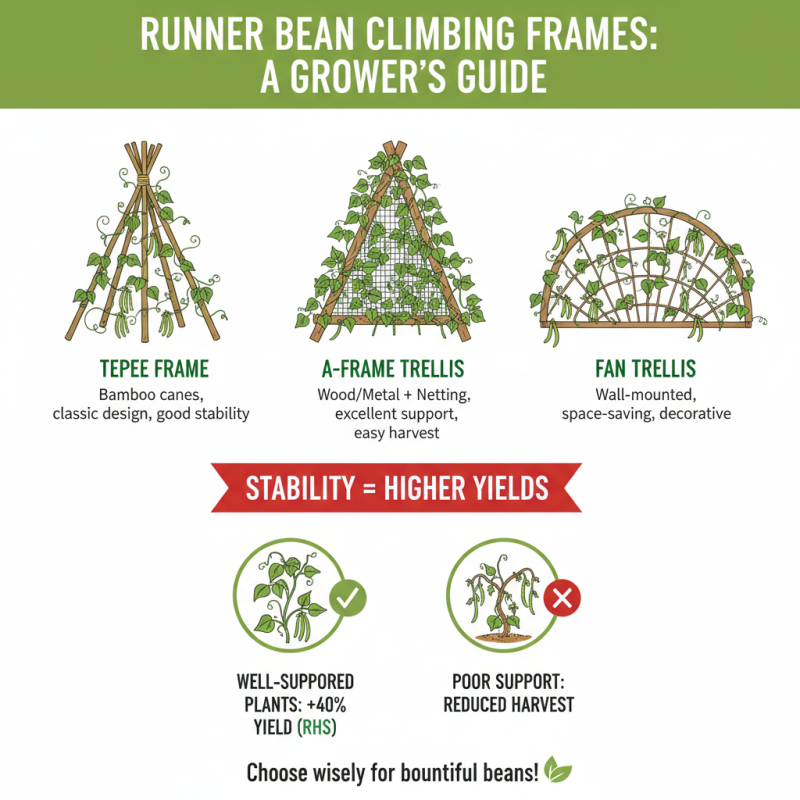
Choosing the right climbing frame for runner beans requires understanding various designs. Stability is crucial for supporting healthy growth. A stable frame prevents plants from falling, which can damage stems and reduce yield. According to the Royal Horticultural Society, poorly supported beans can yield up to 40% less.
Consider the frame material. For instance, wooden frames provide excellent stability but may decay over time. Metal frames offer durability yet can be heavier and more challenging to assemble. Choose a frame that fits your garden’s aesthetic while ensuring it can withstand wind and heavy growth.
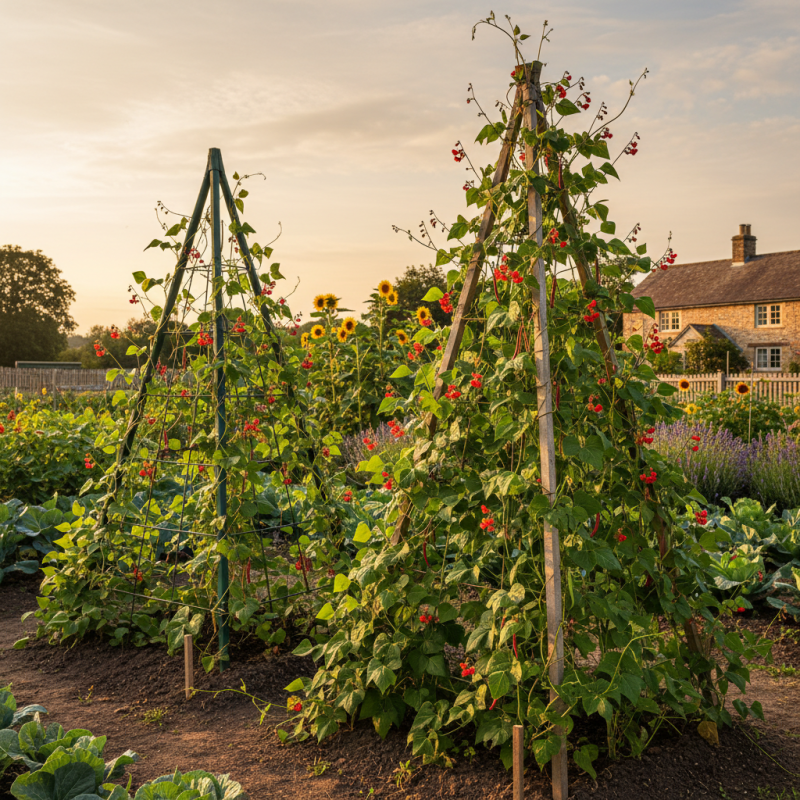
Tip: Opt for a triangular design. This shape enhances stability and distributes weight evenly. Use stakes anchored in the ground for extra support. Regularly check for any signs of wobbling or wear to avoid unexpected failures.
Another tip involves adjusting the height. Taller frames can promote better air circulation. However, they may require closer monitoring. While a taller frame seems advantageous, it may pose challenges for maintaining the plants. Reflect on your choice of height and stability to find the best balance for your garden needs.
Assessing Weight Capacity Requirements for Climbing Frames
When choosing a climbing frame for runner beans, assessing weight capacity is crucial. Many gardeners overlook this factor. A frame needs to support both the plant's weight and any extra elements. Consider the expected height and growth of your plants. Heavy, mature runner beans can weigh significantly. Make sure your frame can handle this load.
Different frame materials have varying weight capacities. Metal frames typically offer greater support than wood. However, wood can provide a natural look. Check the joints and connections too. They need to be sturdy enough to resist bending. Weak points could cause the frame to collapse unexpectedly.
Visualize your garden layout. A flimsy frame may not stand up to weather conditions. Strong winds can topple weaker structures. It’s also important to think about maintenance. A durable frame may require less frequent replacement. Reflect on your gardening goals. Do you want a reliable solution for multiple seasons? Prioritize weight capacity for long-term success.
Evaluating Cost-Effectiveness of DIY vs. Pre-Made Climbing Frames
When considering a climbing frame for runner beans, assessing cost-effectiveness is crucial. DIY options often seem tempting. A report found that DIY frames can reduce costs by 30-50%. However, it's essential to calculate your own time and skill level. Building can take hours, maybe days. Not everyone has the tools or expertise, which can lead to frustration.
Pre-made options provide convenience. They come ready to assemble, often with clear instructions. Industry studies have shown that 70% of gardeners prefer easy setups. These frames may cost more upfront, but they often last longer. A strong, durable frame could save money over time. Maintenance can be lower with well-made products.
Yet, personal preferences play a role. Some gardeners enjoy the crafting experience. They might overlook initial costs for the joy of building. Others may regret the time spent on a subpar design. It's vital to evaluate what matters most in your gardening experience. Balancing cost and enjoyment can lead to a better decision.